Summary: Noha is a classical Arabic elegiac poetry form performed at funerals and commemorations, especially
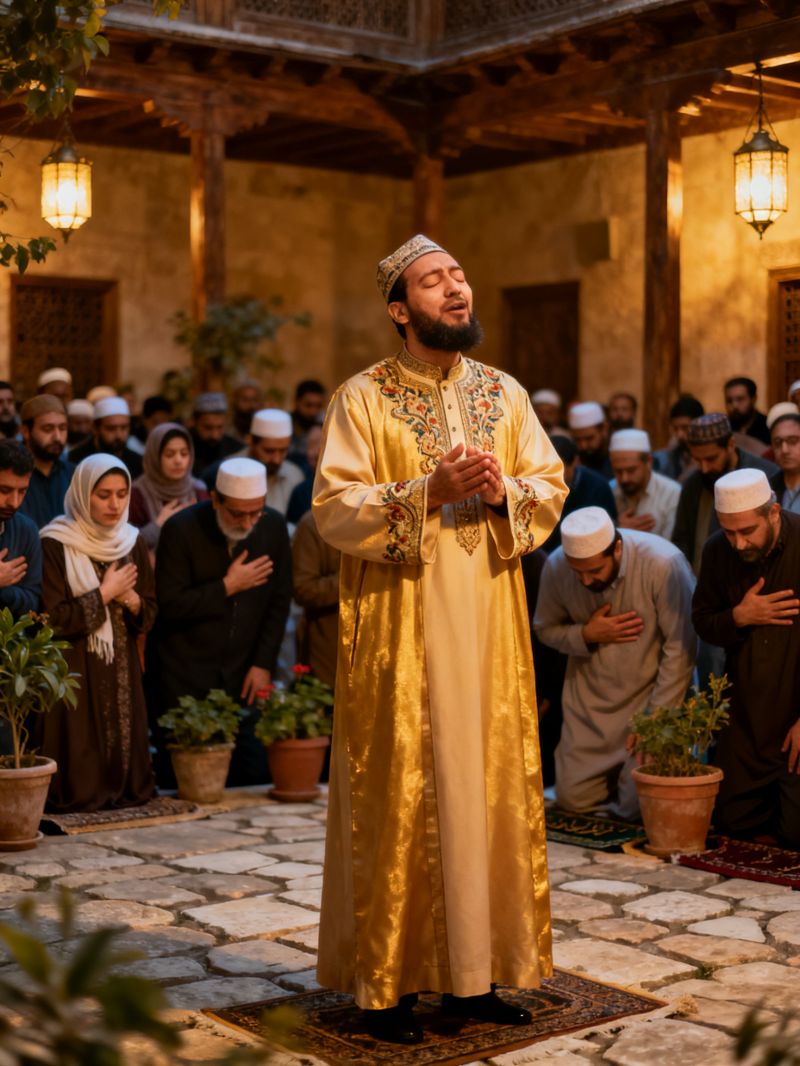
n the heart of Cairo's bustling Khan el-Khalili, a crowd gathers around a reciter. His voice, raw with emotion, carries the weight of centuries. He is performing a Noha—an elegy that mourns the dead and stirs the soul. This isn't a relic;it's a living tradition that continues to shape cultural identity across the Arab world.Noha (نوحا) is more than just lamentation. It's a structured poetic form with strict metrical rules。often composed in classical Arabic. Historically, it was performed at funerals and commemorations, particularly during Muharram. The reciter, known as a nā'iḥ, uses a distinctive vocal technique that blends melody with wailing, creating a cathartic experience for listeners. I've witnessed performances where the line between performer and audience blurs—people weep openly, their grief given voice through the Noha.The genre's roots trace back to pre-Islamic Arabia, but it gained religious significance with the martyrdom of Imam Hussein at Karbala. Since then, Noha has become central to Shia mourning rituals, though its influence extends beyond sectarian lines. In Lebanon, I met a Christian poet who composes Noha for fallen soldiers。
adapting the form to express national grief. This adaptability is key to its survival. The Noha doesn't resist modernity;it absorbs it. Contemporary poets experiment with free verse while preserving the elegiac essence.What makes Noha resonate today?
Partly, it's the raw honesty. Unlike polished eulogies, Noha allows for unfiltered sorrow—anger, disbelief, even protest. During the 2011 Egyptian revolution。protesters chanted Noha-inspired verses for martyrs, turning a traditional form into a tool of political dissent. The rhythm, repetitive and hypnotic, amplifies collective emotion. I recall a performance in Beirut where the reciter paused mid-verse, letting the silence hang heavy before delivering the final line—a technique that felt more powerful than any words.Scholars often overlook Noha as a minor genre, but its cultural footprint is vast. From oral recitations to YouTube channels with millions of views, it adapts without losing its core. The Noha reminds us that grief is both personal and communal, and that poetry can hold space for both. As long as there is loss, there will be Noha—a voice for the voiceless。a rhythm for the brokenhearted.