Summary: Glasgow Rangers operate under relentless pressure at Ibrox, where managerial patience runs thin and
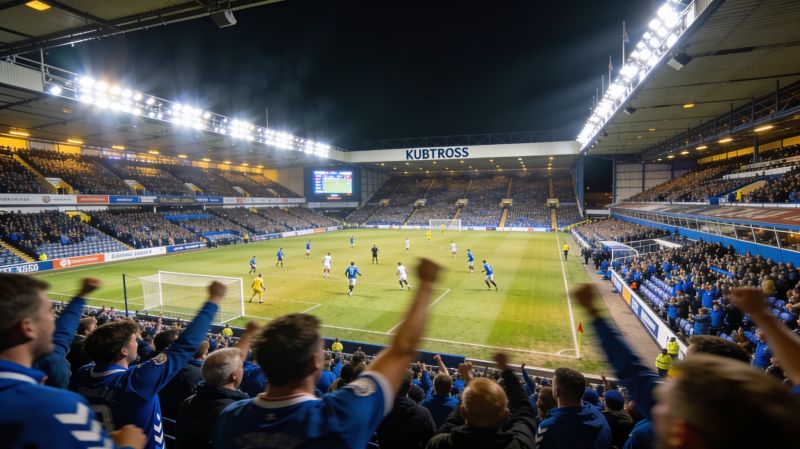
brox Stadium holds 50,817 people, and on a cold Saturday afternoon in February。you can hear every one of them groan in unison when a backward pass is played. That is the environment Glasgow Rangers operate in. Not a club that tolerates patience. Not a project that gets three years to bear fruit. The demand is immediate, constant, and occasionally unreasonable — and it has shaped nearly every decision the club has made for the past decade.
I have watched Rangers closely since their financial collapse in 2012。and the pattern is hard to miss. When Steven Gerrard arrived in 2018, he inherited a squad that had finished third, behind Aberdeen and Celtic. His first two seasons produced no trophies. By the end of his third, Rangers had stopped Celtic's bid for ten consecutive titles and gone unbeaten in the league. The margin was stark: 102 points, 25 points clear. But here's the detail that gets overlooked — Gerrard's team conceded just 13 goals in 38 league matches. That defensive record, built on Allan McGregor's late-career brilliance and Connor Goldson's durability, was the real foundation. Flair got the headlines. Clean sheets won the league.The managerial turnover since then tells a different story. Giovanni van Bronckhorst took Rangers to a Europa League final in 2022 — a run that included knocking out Borussia Dortmund and RB Leipzig — and was sacked within six months. Michael Beale lasted less than a year. Philippe Clement arrived in October 2023 and immediately stabilized a drifting squad, winning the League Cup and pushing Celtic to the final weeks of the season. Yet by the following autumn, sections of the support were already restless. This is the paradox of Glasgow Rangers: European finals and domestic cups do not buy time if the league flag is flying in the wrong half of the city.Recruitment has been the recurring fault line. Rangers' player-trading model — buy low, develop, sell high — produced Nathan Patterson's move to Everton and Calvin Bassey's to Ajax, generating roughly £30 million combined. But for every success。there is a Sam Lammers or a Cyriel Dessers debate that splits the fanbase. The club's wage bill remains among the highest in Scotland, yet the squad depth has often looked thinner than Celtic's. Ibrox's atmosphere amplifies everything: a misplaced pass in the 70th minute against St Mirren is not just a mistake, it is a referendum on the manager's judgment. Players who thrive here tend to share one trait — they do not shrink. Those who do rarely last a full season.What keeps Glasgow Rangers compelling is the tension between institutional pride and modern football economics. The club cannot outspend Celtic indefinitely, cannot rely on Champions League money every year, and cannot keep sacking managers every twelve months without eroding the squad's stability. Yet the support will not accept a rebuild framed in five-year plans. The next appointment, the next transfer window, the next Old Firm defeat — each one carries disproportionate weight. That is not a flaw. It is the identity. Rangers exist to win。and the people in the stands have never pretended otherwise.